
Condensed META_TYPE Taxonomy for Analysts
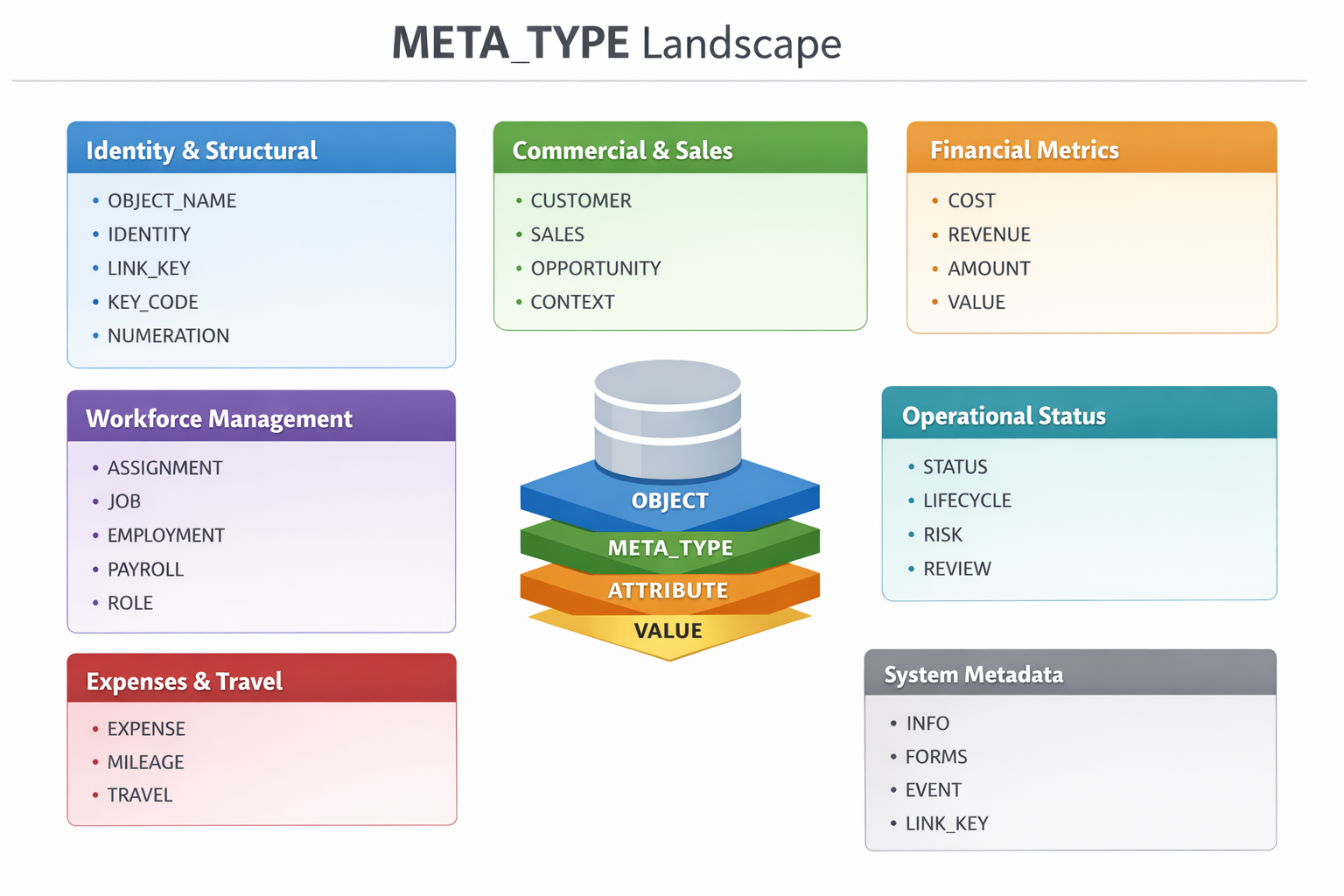
1. Identity Core identifiers and object naming. PurposeObject identifiers. 2. Structural Keys Structural identifiers used to link datasets. PurposeIdentify or reference core business entities. 3. Commercial Context Customer and contractual relationships. PurposeDescribe commercial relationships and contracts. 4. Sales & Pipeline Sales organisation and opportunity tracking. PurposeAnalyse pipeline, opportunity probability, and sales ownership. 5. Financial Values … Read more

Guide to META_TYPES in the CDM Data Views

Purpose META_TYPE is used within CDM metadata views (such as meta_codes, meta_dates, and meta_values) to group related attributes into meaningful analytical categories. Rather than storing hundreds of unrelated attributes, META_TYPE provides a semantic grouping layer that helps analysts understand the nature of the data. Each row therefore follows a pattern similar to: OBJECT → META_TYPE … Read more

Project.meta_codes roles

Provides project role assignment metadata in the standard CDM meta_codes structure, with regional view variants for APC, CAD, USD, UKS, and future IFS-aligned sourcing. Purpose The project.meta_codes_roles family provides a standardised project-role metadata pattern for identifying named project responsibilities against a project object. This allows project role assignments to be consumed consistently across regions even … Read more

How to Parameterise Dataflow Gen2 Destinations for Seamless Dev/Prod Deployment

Managing Dataflow Gen2 across multiple environments (Development and Production) can be a headache. By default, the destination Lakehouse or Warehouse IDs are hardcoded. This means when you deploy to a Production workspace, your dataflow might still try to write back to your Development environment. In this guide, I’ll show you a workaround to parameterize your … Read more

Release 93

Release 92 absorbed in DEV Pipeline Release validation 1. BusOpp (EUR & NA) – Structural Refactor Views affected What has changed We have refactored the MP8 / MP9 source logic to remove duplicated transformation code and consolidate the sources via an early UNION pattern. The primary driver was identification of multiple editions of the same … Read more

Release 91

Structural Consolidation, Export Alignment & ReportingUnit Introduction Overview Release 91 focuses on structural consistency across domains, export pattern alignment, identifier correction, and preparation for enhanced historical interrogation using get.myview. This is a maturity release.It strengthens foundations rather than introducing visible UI features. 1. Removal of Hard-Coded ACTIVE_FLAG Filtering Affected Domains Affected Views (cvw) Change Removed: … Read more

Release 90

This release introduces structural improvements across Project Roles, Employee Codes, ReportingUnit, and Order Stage lifecycle tracking. 🔹 Project Roles – Structural Refactor Project Roles have been removed as a META_TYPE from Project.meta_codes. Instead: Why this matters This isolates regional and conditional role logic away from generic metadata structures, reducing complexity and making future changes safer … Read more

Order: item_dates stage

Order.item_dates_stage captures the order lifecycle timeline as a status-history “item” table. Each row represents a single lifecycle event (a status entry) for an order, with the event date carried as a meta-date value and the event details stored as JSON metadata. Use it when you need to answer questions like: Grain and keys This is … Read more

Release 89

This release focuses on improving the reliability, regional consistency, and future-proofing of project and business opportunity metadata. Key improvements include a redesigned approach to project role handling, introducing dedicated role views and a new email-based identifier aligned with the emerging Person domain. Several legacy defects were corrected, including misclassified company identifiers, invalid JSON payloads affecting … Read more